
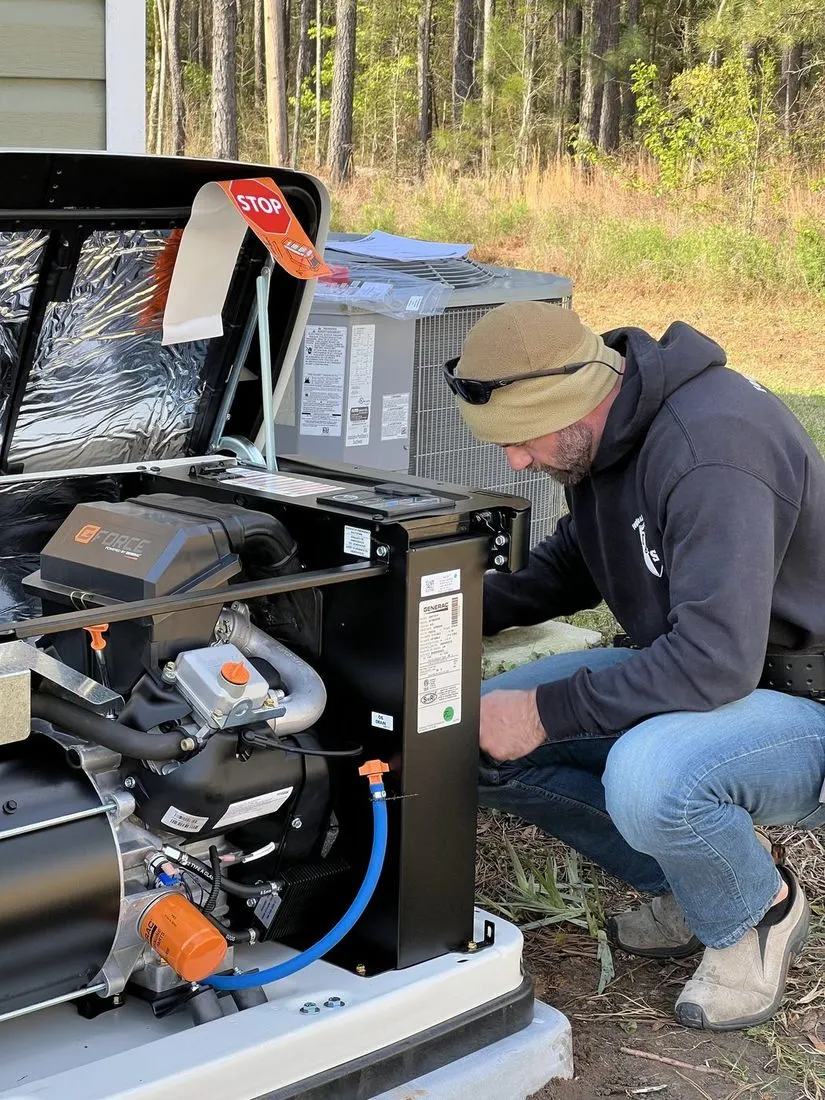
The Grand Strand loses power to hurricanes, tropical storms, and summer thunderstorms every season — Ian alone knocked out more than 170,000 South Carolina homes in a single evening in 2022. A properly-sized standby generator senses the outage and starts in about ten seconds, keeping HVAC, refrigeration, well and sump pumps, and medical equipment running on their own. The same crews that wire new homes across the coast install and service them, dispatched from our Myrtle Beach shop.
Fogle & Sons Electric installs whole-home standby generators across the Grand Strand — Myrtle Beach, North Myrtle Beach, Conway, Surfside Beach, Murrells Inlet, Carolina Forest, and Socastee. We're a licensed South Carolina electrical contractor (SC #CLM111551) and a Generac authorized dealer, installing Generac and Kohler units with automatic transfer switches on propane or natural gas, dispatched from our Myrtle Beach shop. A standby install often pairs with a panel upgrade and whole-home surge protection for storm-grade coverage. New generator quotes are free, including the load calculation; service and repair calls run our $89 diagnostic visit, credited back on any job of $275 or more. We offer financing as low as $89/month (subject to credit approval); if the power's already out, our 24/7 emergency line offers 24/7 emergency response — call (843) 628-7289.
We offer flexible financing options for larger projects so you can get the work done now and pay over time.
📞 Ask About FinancingHurricane season runs June through November on the Grand Strand, and the record is real: Hazel came ashore as a Category 4 in 1954, Hugo in 1989, Matthew in 2016, and Florence flooded parts of Horry County for weeks in 2018. A whole-home generator runs on propane or natural gas and kicks on automatically — no dragging a portable out of the garage at 2 AM during a tropical storm:

We install whole-home generators across the Grand Strand. Tap a city below to see our local service-area page.
Our Grand Strand service branch is new, so there's no invented job history here — this is the generator work our crews are licensed and equipped to do across the coast.
We install and service both. For a Grand Strand home, the better choice depends on the calculated load, fuel supply, service access, and how exposed the site is to salt spray. We compare enclosure and transfer-switch protection for the property and use stainless or corrosion-resistant hardware where appropriate, with the unit placed away from prevailing ocean spray when the required clearances allow. Hurricane-season inventory also matters, so choose and order before the season rather than waiting until a named storm stretches unit availability and installation schedules.
Yes. Most residential standby models can be configured for natural gas or propane, but natural gas service is not universal across the Grand Strand. Many beach and barrier-island homes therefore use a 250- or 500-gallon propane tank. We coordinate the fuel plan around tank setbacks and flood-zone conditions. The installation needs an electrical permit and often a gas or propane permit: unincorporated properties go through Horry County Code Enforcement in Conway, while homes inside Myrtle Beach, North Myrtle Beach, Surfside Beach, or Conway go through that city's building department.
We size it from a load calculation, not a one-size-fits-all square-footage rule. On the coast, that calculation should reflect the equipment you need through a multi-day storm outage: HVAC for heat and humidity control, refrigeration, a well pump where municipal water is unavailable, sump or drainage pumps, and any medical or communications equipment. In low-lying areas near the Intracoastal Waterway, we also account for the flood zone and required pad elevation before selecting a unit and location.
Typically about 10 seconds. The automatic transfer switch senses the utility failure, starts the generator, lets its output stabilize, and then transfers the selected loads automatically. That short start sequence matters on the Grand Strand because hurricane and tropical-system outages can last days, not hours; Hurricane Ian alone knocked out power to more than 170,000 South Carolina homes in a single evening in 2022.
Plan on service at least annually and before hurricane season: check the oil and filters, battery, spark plugs, exercise history, fuel system, and automatic transfer switch. Near the ocean, maintenance also includes inspecting the enclosure, hardware, pad, terminals, and transfer-switch components for salt-air corrosion and cleaning or treating them as needed. After a long outage or flooding event, have the unit checked based on its run hours and exposure rather than waiting for the next annual visit.
It works on everything metal near the ocean — meter bases, disconnects, and generator enclosures included. We site the unit to code clearances, use corrosion-resistant enclosures and hardware, and keep the pad and connections clear of standing salt spray. On the Grand Strand we treat annual service as non-negotiable — it's what keeps a coastal generator starting on the first try when a storm takes the grid down.

We're just a call or click away.